
By Zahra Jardine
In 2018 the City of Cape Town experienced a period of severe water shortage and was essentially declared a site of national disaster. When in fact, just the previous year in 2017, the region had been recorded as the driest year since 1933. This would act as a catalyst for the future possibility of a day zero, something which the city had been dangerously close to experiencing. However the city was met with a tremendous amount of support from all over the country, as well as the world, with extensive media coverage being made over the crisis.
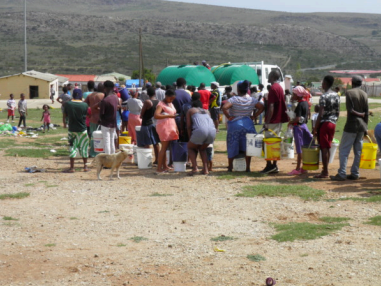
Plans were made, water restrictions were put in place and thousands of litres of water came in from across the country to help push back the looming threat of day zero. These series of events marked Cape Town as the first major city in the world that could have potentially run out of water. But while the country’s eyes were trained on the Cape Town water crisis, the neighbouring Eastern Cape had quietly been barreling headlong into disaster.
While there have been a few mentionings over the past couple of years, it remains relatively unknown that, besides the mother city, large parts of the country have been in the throes of what can be regarded as a silent national disaster. The consequences of a nation wide drought have been felt by many towns in municipalities across the Northern, Western and Eastern Capes, with rural farming communities feeling the brunt of the force.
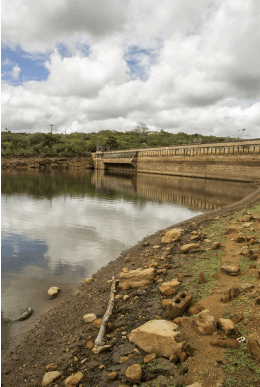
Makhanda is certainly not the only town that has become well acquainted with the drought. Water restrictions are being enforced across many regions of the province with some municipalities already being declared sites of national disaster. With many communities like Vukani in Makhanda, that had previously not had access to water for days on end, one has to ask themselves why is there so little attention being brought to an issue that is literally affecting millions?
It might be chalked up to the fact that the Eastern Cape is regarded as the poorest province in South Africa. People have become desensitised to hearing about the plight that poor people face in this country. Major economic hubs like Johannesburg, Durban and Cape Town dominate the media’s attention and any issues occurring outside their spheres of influence are conveniently put on the back burner and are essentially neglected.
Neighbouring municipalities such as Kouga and the Sarah Baartman district (now declared a disaster zone), are examples of where effects of the drought have been left to accumulate due to government negligence. This is evidenced by the fact that dam levels in various parts of the Eastern Cape have continued to drop to exceedingly low levels. In our very own town dam levels are at a critical level despite the recent rains and the collaborative effort of the university and municipality. Settler’s Dam, which had supplied water to the west side of Makhanda, continues to remain out of commission and cannot pump any more as dam capacity remains at 7.3%.
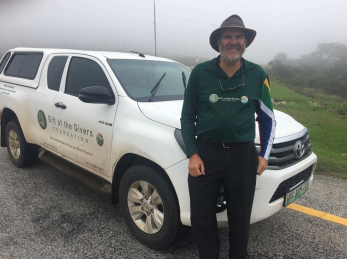
courtesy of Gideon Groenewald.
With Settler’s out of commission, this has now left us with Howisons Poort, its capacity having recently dropped down to 23.6%, and as of now, is expected to last for less than 15 days. It doesn’t help that overall water usage has not been reduced and still stands at around 200-220litres per person (50L/person is the advised). However the municipality continues to remain hard at work despite the difficulties that are involved in filtering and delivering the water at the Waainek and James Kleynhans water treatment works. Anele Mjekula who is a spokesperson for the municipality has commented that there are further plans being made to update the water works pumping capacity from 10 to 20 megalitres per day. This project is set to be completed come 2020, but whether or not it will actually be completed by that time, remains to be seen.
The efforts of Gideon Groenewald has remained one of the most crucial aspects in helping drought stricken Makhanda. Dr. Groenewald who specialises in hydrology, geology and palaeontology, was brought in by Gift of the Givers in February to tap into the town’s rich underground water supply. His contributions to the rescue aid has had a tremendous impact in helping to push back the future threat of a day zero.
However even if the issue of Makhanda’s water supply does manage to be fixed, it is still predicted that there is likely to be three more years of extremely low rainfall. With South Africa being a largely arid country (having little to no rain) drought is going to be a recurring thing of the future. This combined with the ongoing effects of climate change, is only going to exacerbate current whether conditions. Ultimately, the efforts that the municipality and other separate organisations put in can only do much to truly avert the crisis. In order to really combat this issue, people need to start taking accountability to curb their own usage and realise that even though the water still continues run, there may come day when the taps run dry for everyone in Makhanda.
 Diversity Times