
By Dylan Aiston
Life Itself is a heart-warming, emotional window into the life of the world-renowned movie reviewer: Roger Ebert. Yet it lacks an emphasis on what made him famous in the first place: his writing.
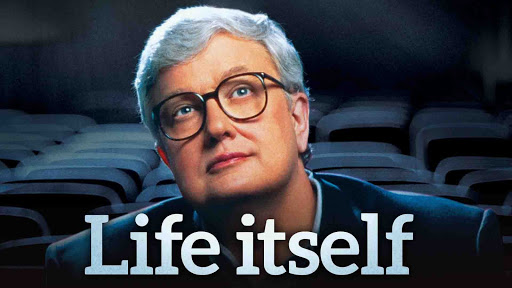
The movie sets us up immediately for an emotional rollercoaster as it throws us straight into the dire physical condition of the documentaries focus: Roger Ebert. Despite Ebert’s condition, his humorous side shines through and persists throughout the film. It is an endearing introduction, foreshadowing a story that tugs at your heartstrings and builds up to an emotionally devastating conclusion.
We are transported back to his childhood for a beautiful and heartfelt description of his youth. The scenes flow into each other, creating an easily digestible collage of Ebert’s early years. The movie is very well structured, with scenes bouncing back and forth between his final days and his youthful, exuberant self. This contrasting of young and old give us a sense of Ebert’s progression in an unorthodox manner. We watch him become who he is at an old age, a maturing process one can see. It leaves you with a feeling that you have just observed him grow up. Quite a powerful feeling not many movies can say they have achieved.
The movie feels authentic, mostly thanks to it not holding back. We get to see Ebert in his entirety, not just some sugar-coated fantasy. We are informed of his flaws, his struggle with his ego paired with his alcoholism. The relatability of his story creates an unmistakable empathy amongst its viewers. His hardships are put quite bravely at the forefront of many scenes, creating a discomfort which only heightens your feelings of sympathy and intimacy towards Ebert.
It is not, however, just filled with one emotional release after another. There is an element of comedy woven quite beautifully into the movie. We get an intimate view of the turbulent relationship of Ebert and his colleague: the famous movie critic Gene Siskel. Their larger-than-life arguments and overblown disagreements about certain films can’t help but make you smile. It is not just here where it happens either, Ebert’s wit and quick sense of humour are portrayed perfectly in its subtlety.
The movie ends with the jarring reality of Ebert’s death. It once again reminds us that this is not some fantasy story. Rather it is simply a reflection on life and its often unfortunate endings. As the conclusion draws near, a large portion of the movie is narrated by Ebert’s wife: Chaz Ebert. This narration creates an even more powerful feeling of sadness as you can hear the raw emotion in her voice. It creates quite a devastating feeling in the viewer, one which won’t be forgotten shortly.
There is one thing however, the movie glosses over and it is something quite important regarding the legacy of Ebert’s life: his writing. For such a prolific and universally recognised writer, the movie spends a brief amount of time showing this. We get some small extracts which happen to arise here and there, but nothing that makes him seem special or a cut above the rest. Detail is rather given to his other successes in life, namely his television show, so one must question why is his writing being shown almost as an afterthought?
Despite this lack of focus on Ebert’s writing, the movie is still a must see. It is an extraordinary life portrayed in an extraordinary manner. If you are looking for something to pull at your heartstrings and leaves you feeling in awe then look no further than Life Itself.
 Diversity Times